Butterfly Digital Paper Art: A Seamless Creative Catalyst for Modern Makers
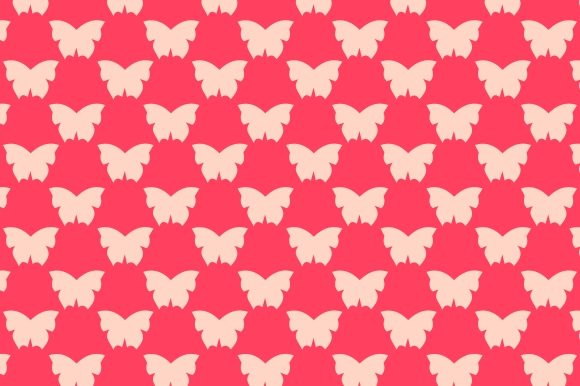
Butterfly Digital Paper Art isn’t just another decorative pattern—it’s a versatile, high-fidelity design asset built for today’s fluid creative workflows. At its core, it’s a meticulously crafted seamless repeat featuring delicate, stylized butterflies arranged with rhythmic balance and organic flow. But its real value lies in how effortlessly it transitions across contexts: from silk scarves and linen napkins to boutique gift wrap, event backdrops, digital presentations, and even ceramic tile mockups. This isn’t clipart repurposed for print; it’s purpose-built digital paper art—designed with intention, resolution, and adaptability in mind.
Why Seamless Patterns Are No Longer Optional—They’re Essential Infrastructure
Modern creators—from indie textile designers launching small-batch collections to educators preparing classroom visuals or marketers building cohesive brand assets—rarely work in isolation. They juggle multiple output formats, tight deadlines, and shifting client or audience expectations. In that environment, a single 3600×3600 px JPG file that tiles perfectly without visible seams isn’t a convenience—it’s infrastructure. Unlike vector-based repeats that require software proficiency to scale or recolor, this Butterfly Digital Paper Art delivers immediate usability: drag, drop, crop, print, or layer. No plugins. No licensing ambiguity. No pixelation at poster size.
This reflects a broader shift: professionals are prioritizing *asset readiness* over raw flexibility. A designer launching an Etsy shop doesn’t need infinite customization options—they need reliability, speed, and consistency across product mockups, social thumbnails, and packaging. Likewise, a wedding planner sourcing custom backdrops needs predictable color fidelity and edge-to-edge coverage—not hours spent stitching tiles in Photoshop. The rise of print-on-demand platforms, DIY home décor tools, and AI-assisted design workflows has made seamless, high-res raster assets more valuable than ever—not because they replace skill, but because they free up time for decisions that truly matter: composition, storytelling, and emotional resonance.
From Craft Tradition to Digital Precision: How Butterfly Motifs Evolved
Butterflies have long carried symbolic weight—transformation, fragility, lightness—making them enduring motifs in stationery, textiles, and fine art. Historically, butterfly patterns appeared in hand-blocked fabrics, engraved wallpaper, and watercolor illustrations—each iteration constrained by physical technique and material limits. Repetition was labor-intensive; scaling introduced distortion; color variation required separate plates or stencils.
Digital paper art changes that equation. Butterfly Digital Paper Art honors the motif’s lyrical qualities while embracing computational precision: consistent spacing, calibrated opacity gradients, balanced negative space, and intentional variation in wing orientation to avoid mechanical monotony. It’s not “digital mimicry” of analog craft—it’s a new language, fluent in both screen and substrate. That evolution matters because it aligns with how people now engage with pattern: not as static decoration, but as expressive scaffolding. A café owner might use it subtly as a menu background; a children’s book illustrator could isolate individual butterflies as layered elements; a fabric entrepreneur may recolor it in Pantone-matched palettes for seasonal drops—all starting from the same foundational file.
Real-World Applications: Beyond the Obvious
- Fabrics & Textiles: Print directly onto cotton voile for lightweight scarves or onto performance polyester for sportswear linings. The 3600×3600 px resolution ensures clarity even when scaled to 1-meter-wide fabric repeats.
- Gift Wrapping & Packaging: Apply to kraft paper, foil-stamped boxes, or reusable cloth wraps. Its balanced density prevents visual overwhelm on small surfaces while holding impact at arm’s length.
- Wallpaper & Interiors: Use as a full-wall mural or as an accent band above wainscoting. Because it’s seamless and high-resolution, it avoids the “stretched JPEG” look common with low-res downloads.
- Digital Backdrops & Presentations: Layer beneath text in Keynote or PowerPoint for branded slide decks—or use as a subtle overlay in Zoom virtual backgrounds (blurred slightly for depth).
- Educational & Therapeutic Tools: Print on cardstock for sorting activities, sensory boards, or mindfulness coloring pages (butterfly outlines can be traced or filled within the pattern’s natural contours).
What “Ready to Print” Actually Means—And Why It Matters
“Ready to print” is often used loosely—but here, it carries concrete meaning. The 3600×3600 px JPG is delivered at 300 DPI when sized to 12×12 inches, meeting industry standards for professional printing. It’s saved in sRGB color space for accurate screen-to-print translation, with no embedded profiles that cause shifts in CMYK workflows. There are no watermarks, no transparent layers requiring flattening, and no hidden compression artifacts that bloom under magnification.
This level of technical readiness responds to real friction points: freelancers submitting files to print vendors who reject RGB assets or non-standard dimensions; teachers downloading “free patterns” only to discover they’re 72 DPI web graphics; small studios wasting budget on retouching poorly tiled repeats. Butterfly Digital Paper Art removes those variables—not by oversimplifying, but by delivering what experienced users actually need: a trustworthy, production-grade starting point.
Design Ethics, Sustainability, and Intentional Creativity
As sustainability becomes central to creative practice—not just in materials, but in process—the value of reusable, multipurpose digital assets grows. Printing one high-quality butterfly pattern file once and deploying it across ten applications reduces the need for redundant design work, repeated stock purchases, or disposable mockup templates. It supports a “design once, apply thoughtfully” mindset.
That intentionality extends to aesthetic choice, too. This pattern avoids trend-driven excess—no neon gradients, no hyper-realistic photorealism, no forced maximalism. Instead, it offers quiet sophistication: soft contrast, breathable spacing, and a palette that adapts gracefully to warm or cool undertones. It works whether your brand voice is minimalist, nostalgic, botanical, or contemporary—because it doesn’t shout. It supports.
Getting Started—Without Overthinking It
You don’t need specialized software to begin. Open the JPG in any image editor—even Preview on Mac or Photos on Windows—and resize it to fit your canvas. For fabric printing, upload directly to Spoonflower or Printful. For wallpaper, use it in Canva or Adobe Express to preview scale against room dimensions. For gift wrap, tile it in a free online tool like Photopea, then export as PDF for local print shops.
If you’re experimenting, try these low-risk starting points:
- Print a single 8×10 inch sheet and use it as a desk mat or journal cover.
- Overlay a 20% opacity version on a neutral photo for Instagram story backgrounds.
- Cut out individual butterflies with scissors or a craft cutter to create tactile collages or greeting cards.
Butterfly Digital Paper Art succeeds not because it’s “everything to everyone,” but because it meets specific, unglamorous needs with quiet competence: scalability without compromise, beauty without brittleness, and creativity that starts where your workflow already lives.