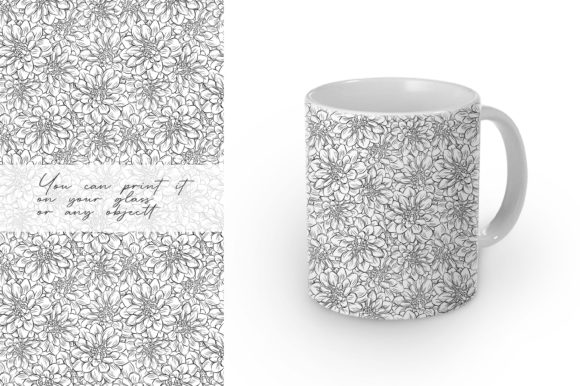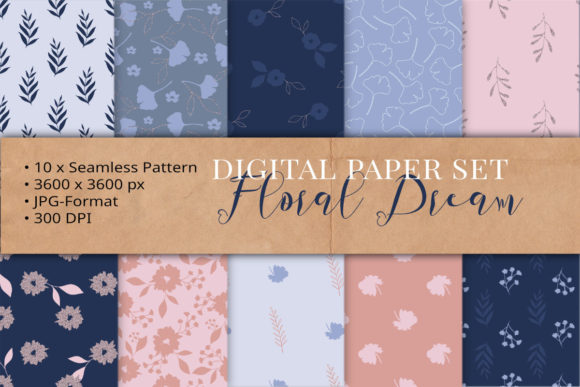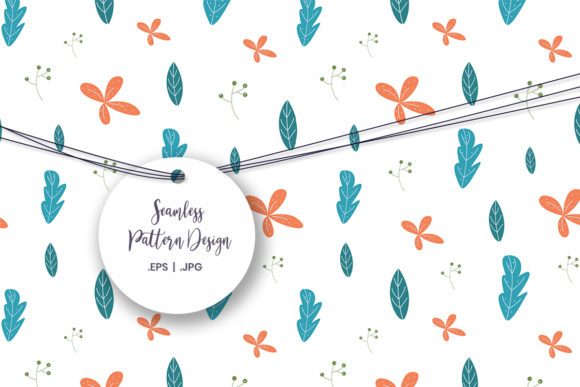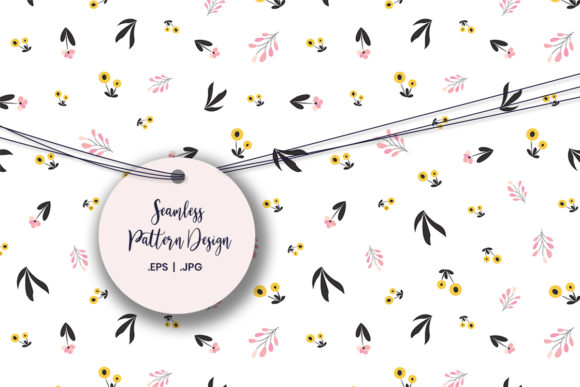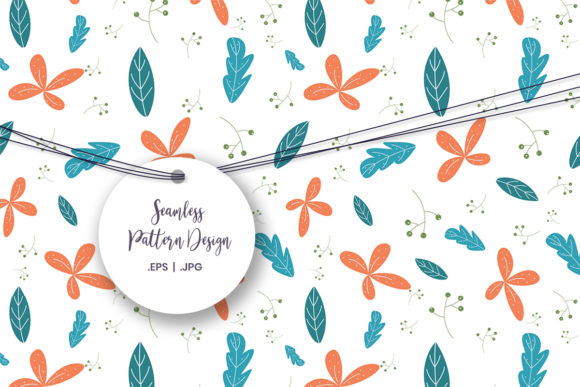
Decorative Floral Seamless Pattern
A Decorative Floral Seamless Pattern is more than just a repeating design—it’s a versatile, ready-to-use visual tool that eliminates the guesswork and time-consuming effort of building backgrounds from scratch. Whether you're designing a birthday invitation for your child’s party or crafting branded packaging for your small business, this pattern delivers consistent, professional-looking results without requiring advanced design skills or hours of trial and error.
Why Seamless Matters—Especially for Real Projects
“Seamless” isn’t just a design term—it’s a functional advantage. Unlike tiled images with visible edges or misaligned repeats, a true seamless pattern flows continuously across any surface, large or small. That means when you scale it up for wrapping paper or down for a label, there are no awkward gaps, jumps, or mismatched stems. This reliability saves time during production and avoids costly reprints or last-minute fixes—especially important if you’re preparing physical materials like greeting cards or party decorations on a tight deadline.
Practical Uses Across Creative and Professional Workflows
This Decorative Floral Seamless Pattern supports real-world tasks—not theoretical ones. Here’s how it fits naturally into common scenarios:
- Scrapbooking & Kids’ Crafts: Print the JPG file onto cardstock or sticker paper, then cut out floral accents or use it as a full-page background. Its soft, balanced composition keeps focus on photos and handwritten notes—not distracting clutter.
- Card Making & Greeting Cards: Layer the pattern behind text in design software (like Canva or Adobe Express), or print directly onto premium cardstock. The EPS 10 vector format ensures crisp lines even at small sizes—ideal for elegant wedding or thank-you cards.
- Wrapping Paper & Party Invitations: Because it scales infinitely, you can tile it across wide-format printers for custom rolls—or adapt it to standard letter-size sheets for DIY printing. No need to buy generic stock paper when you control the look and tone.
- Digital Backgrounds: Use the high-resolution JPG as a subtle backdrop for Zoom meetings, social media banners, or digital newsletters. Its light density and balanced spacing prevent visual fatigue while adding warmth and personality.
- Labels & Packaging: Small business owners often overlook how much brand cohesion comes from consistent texture—even on product tags or shipping labels. This pattern adds quiet sophistication without competing with logos or essential information.
Who Benefits Most—and Why
Creatives aged 20–50—including educators planning classroom decor, freelance designers sourcing reliable assets, bloggers creating themed content calendars, and small business owners launching handmade goods—find immediate value here. These users typically juggle multiple roles, tight budgets, and variable design tools. They don’t need another complex plugin or subscription—they need clarity, compatibility, and confidence that what they download works *now*, across platforms and outputs.
For example, a homeschooling parent might use the pattern to design printable reward charts or seasonal activity sheets—knowing the JPG renders cleanly on home printers. A boutique stationery seller can integrate the EPS version into their branding suite, ensuring consistency across business cards, email headers, and Instagram Story templates. No extra learning curve. No licensing surprises.
Format Choices: EPS 10 vs. High-Resolution JPG
You’ll receive two complementary formats—each serving distinct needs:
- EPS 10 (vector): Best for editing, scaling, or integrating into professional print workflows. It remains sharp at any size and allows color adjustments in Illustrator or Affinity Designer. Ideal if you plan to recolor elements, isolate parts of the pattern, or prepare files for commercial printers.
- JPG (high-resolution): Optimized for quick use in Canva, PowerPoint, Google Slides, or basic photo editors. At 300 DPI and generous dimensions, it prints cleanly on home or office printers—and loads fast for digital presentations.
Neither format requires special software to open, but keep in mind: EPS files need vector-capable applications to edit fully. If your workflow is entirely raster-based (e.g., only using Photoshop Elements or mobile apps), the JPG will be your go-to—while still delivering strong visual impact.
A Note on Color Accuracy
The note—“The colors on your screen may be slightly different from the actual print”—isn’t a limitation; it’s an industry-standard reminder grounded in color science. Monitors vary in brightness, contrast, and calibration. Printers interpret RGB (screen) data differently than CMYK (ink). To manage expectations:
- Use the JPG for digital-only projects where screen fidelity matters most.
- For critical print jobs (e.g., wedding stationery), request a physical proof from your printer—or test a small batch first.
- If precise Pantone matching is required, consult a professional prepress service—this pattern wasn’t created with spot-color separation in mind.
When to Consider Alternatives
While this Decorative Floral Seamless Pattern excels in warmth, balance, and broad usability, it may not suit every goal. For instance:
- If your project demands bold, high-contrast geometry or modern minimalism, a botanical motif may feel too traditional.
- If you need editable individual flowers (e.g., to rearrange stems or change petal counts), a vector pattern built from grouped objects—not a seamless tile—would offer more flexibility.
- If you’re working under strict brand guidelines requiring exact hex codes across all assets, verify the included color values match your palette before committing to large-scale use.
In those cases, comparing a few pattern options side-by-side—testing how each behaves at different scales and in context—is always wise. But for everyday creative work where charm, cohesion, and efficiency matter most, this pattern delivers dependable performance.
Getting Started Without Overthinking
You don’t need to master design theory to use this well. Start simple: open the JPG in Canva, set it as a background, and overlay your text or photo. Or import the EPS into Illustrator, change one fill color, and export a new variation in seconds. The strength lies in its readiness—not complexity.
Over time, you’ll notice patterns in how you reach for it: the same file used for a teacher’s bulletin board, then repurposed for a client’s gift tag, then cropped and animated for a social media highlight reel. That kind of reuse isn’t accidental—it’s built into thoughtful, well-executed design resources.
Ultimately, the Decorative Floral Seamless Pattern earns its place not by being flashy, but by being consistently useful—across tools, timelines, and intentions. It supports your goals quietly, reliably, and without demanding attention away from what truly matters: the people, messages, and moments you’re creating for.