Odds N Ends Crochet Beanie
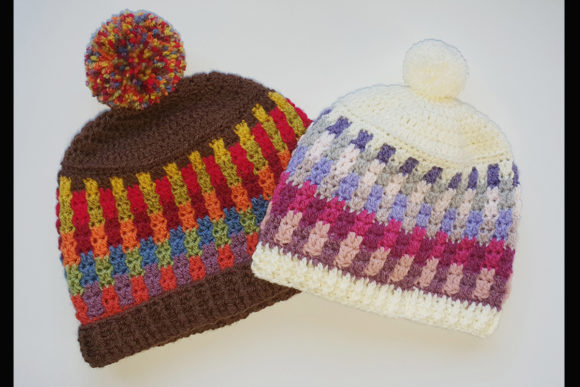
There’s a quiet shift happening in how makers approach creativity—not as a pursuit of perfection, but as an act of thoughtful resourcefulness. The Odds N Ends Crochet Beanie sits at the heart of this movement: a deliberately designed, mosaic-crocheted beanie that transforms leftover yarn scraps into something cohesive, stylish, and deeply personal. It’s not just another pattern—it’s a response to real-life constraints: small stashes, limited storage, evolving colour palettes, and the growing desire to create without excess.
Why Mosaic Crochet Fits Modern Making Habits
Mosaic crochet has quietly matured from a niche technique into a cornerstone of contemporary handcraft. Its two-colour, single-row structure eliminates the bulk of carrying yarn across rows—making it ideal for portable projects, commuting makers, or those juggling creative time between work and family. Unlike traditional tapestry or intarsia, mosaic relies on strategic front-post and back-post stitches to build texture and contrast, all while working with only one colour per row. That simplicity—paired with visual impact—makes it uniquely suited to intermediate crocheters ready to expand their repertoire without stepping into advanced colourwork territory.
This beanie leverages that strength. Each round uses just one active colour, reducing tangles and tension inconsistencies. The rhythm becomes meditative: alternate rows of solid colour and mosaic texture, building depth without complexity. And because it’s written in both US and European crochet terminology, it bridges communities—whether you learned from a UK granny, a YouTube tutorial from California, or a printed booklet from Berlin.
A Pattern Built for Real Stashes
Let’s be honest: most crafters don’t buy ten full skeins to make one hat. They have half-skeins of teal left over from a summer shawl, a 30g remnant of mustard yellow from a baby blanket, three shades of grey rescued from a discontinued line. The Odds N Ends Crochet Beanie was developed with those fragments in mind. Its 10-colour layout isn’t prescriptive—it’s flexible. You can substitute any DK-weight yarn (Stylecraft Special DK is recommended for its consistency and softness), and adjust stripe placement based on what you have on hand. A 20g scrap? Use it for one contrasting round. A 50g ball? Assign it to the main body or brim.
The result is inherently sustainable—not as a marketing buzzword, but as daily practice. No more hoarding partial skeins “just in case.” No more abandoning projects because the perfect match disappeared from stock. Instead, there’s intentionality: choosing which colours advance the rhythm of the design, which add surprise, which ground the piece visually.
Practical Fit for Diverse Needs
Measurements are intentionally inclusive: adult sizes span 20–22 inches (50.8–55.9 cm), child sizes 18–19 inches (45.5–47 cm). That range accommodates natural head shape variation—not just age. A teen with a petite frame or an adult with a narrower head finds room here, without needing to modify stitch counts or gauge drastically. The brim uses a smaller 3.5mm hook for gentle elasticity, while the main body works up quickly on a 4mm—balancing structure and drape.
Tension guidance—22 stitches and 30 rows over 10x10cm—is calibrated for accessibility. It doesn’t demand rigid precision, but offers a reliable benchmark if your fabric feels too stiff or too loose. And because mosaic relies on consistent stitch height, minor variations in gauge affect texture more than fit—meaning small deviations won’t compromise wearability.
Intermediate Skill, Accessible Execution
Calling this pattern “intermediate” reflects its thoughtful layering—not difficulty for difficulty’s sake. You’ll need familiarity with basic stitches (sc, hdc, dc), front-loop and back-loop techniques, and reading simple repeats. What elevates it is the application of those skills within a mosaic context: recognising when to skip a stitch to preserve the chart’s alignment, identifying front loops consistently across rounds (hence the stitch markers at row start/end), and managing colour changes cleanly without twisting strands.
It’s the kind of project that builds confidence through repetition—not repetition of the same stitch, but repetition of decision-making: *Which colour comes next? Where does this motif land relative to the previous round? How does this row’s texture support the one before it?* These aren’t abstract questions. They’re tactile, immediate, and directly tied to visible progress.
Design Choices That Serve Function and Expression
The beanie’s silhouette balances warmth and versatility. The crown decreases are gradual, avoiding pointy peaks or tight crowns—ideal for glasses wearers or those who prefer low-profile accessories. The brim rolls naturally but holds shape thanks to the tighter hook and ribbed texture. Optional pom-pom? Yes—but it’s truly optional. The mosaic band at the base provides enough visual interest that embellishment remains a choice, not a requirement.
And the charts? Positioned at the bottom of the document—not embedded mid-instruction—so you can print only what you need, or refer digitally without scrolling past written steps. They’re clean, scalable, and annotated with both US and EU symbols, reinforcing clarity over assumption.
What This Means for Creators and Small Businesses
For educators and pattern designers, the Odds N Ends Crochet Beanie models how to write inclusively—not just linguistically, but logistically. Dual terminology, metric/imperial measurements, stash-friendly yardage estimates, and technique notes woven into instructions (not siloed in a glossary) reduce friction for global learners. For small yarn businesses, it’s a compelling vehicle for mini-skein collections or curated “odds & ends” bundles—positioning leftovers not as afterthoughts, but as intentional design elements.
For freelancers and side-hustlers, it’s portfolio-ready: wearable, photogenic, and technically articulate. A finished beanie signals fluency in texture, colour theory, and construction—not just stitch execution. And for hobbyists returning after years away? The rhythm is forgiving, the stakes low, and the reward immediate: a handmade item that fits, flatters, and tells a story of what was already on hand.
Getting Started Thoughtfully
Before you begin, gather what you have—not what you think you should have. Sort your DK-weight remnants by weight first (ensure they’re all true DK/8-ply), then group by tone or contrast potential. Lay out five light and five dark options—even if some are mid-tones—to test visual balance. Use stitch markers not just for round beginnings, but to flag where front loops fall in early rounds, until muscle memory takes over.
Work the first two mosaic rounds slowly. Check your chart alignment against your fabric after each round—not at the end of the project. If a motif appears shifted, it’s easier to frog one round than six. And remember: tension consistency matters more than absolute stitch count. If your fabric lies flat and stretches comfortably, you’re on track.
Looking Ahead—Without Overpromising
Crochet isn’t trending upward because it’s “viral.” It’s holding steady because it meets enduring human needs: tactile engagement, measurable progress, and tangible outcomes in a world saturated with intangible outputs. Patterns like the Odds N Ends Crochet Beanie reflect that reality—they don’t chase novelty, but deepen utility. They ask makers to look inward (at their own stashes, rhythms, preferences) rather than outward (for the next big thing).
That’s why this pattern includes no “pro tips” about speed or shortcuts. Instead, it invites attention: to how a mustard yellow round warms up a cool-toned sequence, how a tightly twisted join affects the brim’s elasticity, how finishing with a whipstitch seam—rather than weaving ends in randomly—creates invisible durability. These details don’t scale into headlines. But they do scale into better making.
Final Notes on Use and Care
Stylecraft Special DK is machine washable at 30°C and tumble dry low—practical for everyday wear. To preserve mosaic definition, avoid aggressive agitation or high heat. Block lightly if needed: dampen, pin to size on a towel, and air-dry flat. Avoid steam, which can blur stitch definition in acrylic blends.
Your finished Odds N Ends Crochet Beanie won’t just keep you warm. It’ll hold evidence of choices made—colours selected, rows repeated, moments claimed amid busier days. That’s not nostalgia. It’s quiet resilience, stitched row by row.