Christmas Ball - Laser Cut: A Strategic Tool for Creative Execution
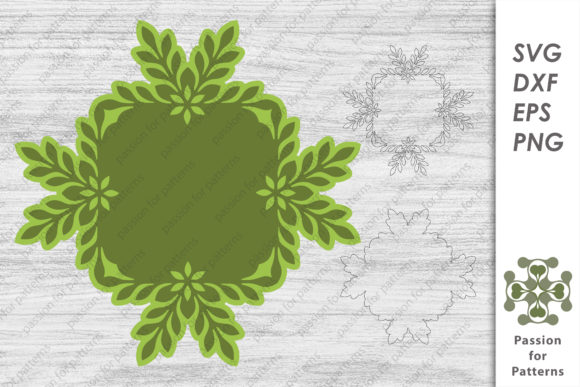
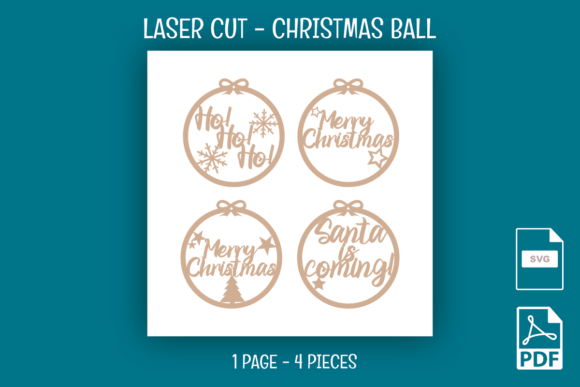
Christmas Ball - Laser Cut isn’t just a decorative craft file—it’s a precision-designed asset with operational and expressive utility. When you download the package—containing one PDF (for visual reference and curve documentation) and one SVG (fully editable, import-ready)—you’re acquiring more than geometry. You’re gaining a calibrated starting point for intentional making: four distinct, balanced patterns engineered for clean plywood cutting, scalable line thickness (default 0.1mm), and seamless integration into design workflows.
Why Precision Matters in Creative Decision-Making
Every time you choose a template over improvisation—or refine a template instead of starting from zero—you’re allocating cognitive bandwidth toward outcomes, not mechanics. Christmas Ball - Laser Cut supports that shift. The four included patterns aren’t arbitrary ornaments; they reflect deliberate compositional logic—radial symmetry, layered negative space, interlocking contours, and modulated density—all tested for structural integrity in 3–6mm plywood. That means less trial-and-error on the laser bed, fewer material reworks, and faster iteration between concept and physical artifact.
For educators building tactile learning kits, for small-batch gift brands refining seasonal packaging, or for freelancers prototyping client-facing holiday displays—this isn’t about “getting something done.” It’s about reducing execution friction so strategy stays centered on audience resonance, brand alignment, and experiential coherence.
Four Patterns, Four Strategic Entry Points
Each pattern serves a different functional and communicative role—not just aesthetic variation:
- Orbital Lattice: A concentric ring structure with graduated cutouts. Ideal when clarity and legibility matter—think branded tabletop centerpieces where logos or monograms can be inset without compromising structural rigidity.
- Frost Fractal: A branching, snowflake-inspired motif with high edge-to-area ratio. Best suited for lightweight hanging installations where air movement enhances visual dynamism—and where fine detail signals craftsmanship to discerning customers.
- Modular Facet: Geometric, tessellated segments that interlock across multiple balls. Enables scalable wall-mounted arrangements or collaborative classroom projects where consistency across units reinforces collective effort or thematic unity.
- Contour Halo: A bold outer silhouette with subtle internal gradation. Prioritizes impact at distance—useful for retail window displays, event backdrops, or photo booth props where immediate recognition outweighs intricate texture.
Choosing isn’t about preference alone. It’s about matching pattern behavior to your objective: Do you need durability under handling? Visual weight in ambient light? Compatibility with secondary finishing (paint, stain, resin)? Or adaptability across formats (e.g., same file scaled for table decor and ceiling suspension)?
Integration Is Where Strategy Becomes Tangible
The SVG file is the linchpin. Because it imports cleanly into Illustrator, Inkscape, CorelDRAW, Affinity Designer, and most CAD-adjacent tools, you retain full control over stroke weight, layer organization, grouping logic, and export parameters. That means you can:
- Adjust cut lines to 0.05mm for ultra-fine detail on thin veneer—or widen to 0.3mm for aggressive kerf compensation on dense hardwoods;
- Isolate individual pattern layers to test color fills, engraving zones, or registration marks before cutting;
- Batch-duplicate and array elements across sheet layouts to maximize plywood yield—critical when scaling production beyond single-digit units;
- Embed version-controlled metadata (e.g., project name, date, material spec) directly into the file for traceability across teams or clients.
This level of adaptability transforms Christmas Ball - Laser Cut from a static download into a living component of your workflow architecture. It doesn’t replace planning—it rewards it.
When Context Overrides Convenience
Using Christmas Ball - Laser Cut without grounding in purpose introduces quiet risk. A beautifully cut ornament loses strategic value if it:
- Clashes tonally with existing brand assets (e.g., an ornate Frost Fractal deployed alongside minimalist sans-serif packaging);
- Demands finishing steps your timeline or skill set can’t support (e.g., hand-sanding delicate lattice edges without blunting definition);
- Assumes uniform plywood quality—yet your supplier delivers inconsistent grain density, causing uneven burn-through on the same power/speed settings;
- Is treated as a “final” deliverable rather than a modular base—missing opportunities to integrate lighting channels, magnetic mounts, or QR-linked storytelling.
None of these are flaws in the file. They’re reminders that tools amplify intent—not substitute for it. The PDF curves document exists not just for verification, but as a checkpoint: Does this geometry serve the outcome I’ve defined? If the answer isn’t clear before importing, pause. Refine the goal first.
Long-Term Value Beyond the Holiday Season
Think beyond December. The underlying design logic—modularity, scalability, material-aware geometry—is transferable. Educators repurpose the Orbital Lattice as a kinesthetic math model for rotational symmetry. Product designers adapt the Contour Halo’s silhouette as a template for custom speaker grilles or acoustic panels. Marketers use the Modular Facet’s tiling behavior to prototype dynamic social media assets—each ball representing a campaign pillar, arranged and rearranged visually to test narrative hierarchy.
That longevity depends on how you treat the files now. Name layers meaningfully (“cut_outline”, “engrave_text”, “registration_mark”). Preserve original groups when scaling. Document your kerf adjustments per material batch. These aren’t “extra steps”—they’re compound investments. Each decision made deliberately today reduces friction next season, next project, or next team handoff.
Practical Anchors for Intentional Use
Before importing Christmas Ball - Laser Cut into your next project, ask three questions:
- What specific outcome must this enable? (e.g., “Increase dwell time at our pop-up shop by 20% through interactive ornament assembly stations.”)
- Which pattern’s structural or visual behavior best supports that outcome—and why? (e.g., “Modular Facet allows co-creation without tool dependency, lowering barrier to participation.”)
- What constraints—material, time, skill, equipment—must shape how I modify or deploy it? (e.g., “Our CO₂ laser has ±0.08mm positional tolerance, so we’ll lock stroke width at 0.12mm and avoid sub-2mm interior gaps.”)
Answering honestly surfaces assumptions, exposes dependencies, and reveals whether Christmas Ball - Laser Cut is the right lever—or whether a simpler, more constrained solution would deliver greater leverage.
Final Thought: Precision Serves Purpose, Not the Other Way Around
Christmas Ball - Laser Cut succeeds not because it’s technically flawless—but because it’s designed to be interrogated, adapted, and anchored in real-world constraints. Its value emerges only when paired with clear goals, contextual awareness, and willingness to edit—not just execute. Whether you’re launching a micro-brand, designing a school STEAM module, or refreshing your studio’s seasonal offerings, treat the file not as an endpoint, but as a calibrated interface between intention and material reality. That’s where durable creative advantage begins—and where Christmas Ball - Laser Cut earns its place in your toolkit.