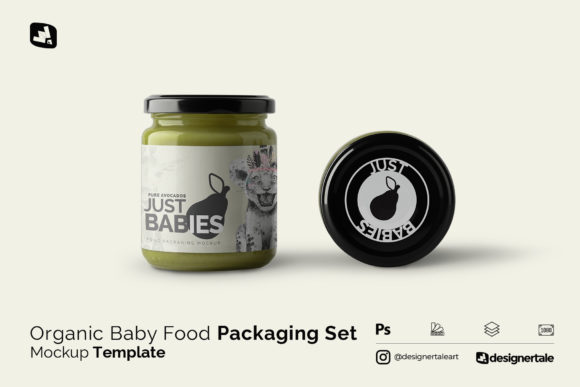
Baby Food Packaging Mockup: A Smart Design Tool
For parents and food manufacturers, the importance of baby food packaging cannot be overstated. It’s not just about containing the product—it’s about conveying trust, quality, and care. That’s where a Baby Food Packaging Mockup comes into play. This tool allows designers and marketers to present their packaging in a realistic, professional way that aligns with the seriousness of infant nutrition.
A well-designed mockup can make a big difference in how your product is perceived. Whether you’re launching a new line of organic baby food or refining an existing brand, having a clear visual representation of your packaging is essential. The right mockup helps you communicate your vision effectively, ensuring that every detail—from color to texture—aligns with your brand identity.
Why Baby Food Packaging Mockup Matters
The first step in creating a compelling product offering is to visualize it accurately. A Baby Food Packaging Mockup provides a realistic preview of how your packaging will look in real-world settings. This is especially important for infant food, where appearance can influence consumer choices and parental trust.
Consider a scenario where you’re pitching your new line of baby food to retailers or investors. Without a mockup, you might rely on basic sketches or digital renderings that lack depth. A high-quality mockup, however, offers a tangible sense of the final product, making it easier for stakeholders to envision its success in the market.
Moreover, a mockup allows you to experiment with different design elements before committing to production. You can test various color schemes, typography, and layouts to see what works best. This flexibility is invaluable when designing for a niche market like infant food, where even small details can have a significant impact.
Key Features of a Professional Baby Food Packaging Mockup
When selecting a Baby Food Packaging Mockup, look for features that enhance both functionality and aesthetics. One standout feature is the ability to change colors easily. For example, if your product comes in multiple flavors, the mockup should allow you to switch bottle colors to match each variety. This versatility ensures consistency across your product line while maintaining visual appeal.
Another important aspect is the quality of the base images. High-resolution files at 300DPI ensure that your designs look sharp and professional, whether they’re used for print or digital presentations. Photorealistic effects add an extra layer of authenticity, helping to showcase your packaging in the best possible light.
Organization is also crucial. A well-structured mockup with color-coded layers and smart objects makes the design process smoother. This is particularly beneficial for teams working on multiple projects, as it reduces the time spent navigating complex files. With five PSD files included, you’ll have a range of variations to choose from, saving you time and effort during the design phase.
How Baby Food Packaging Mockup Saves Time and Enhances Creativity
Time is a valuable resource, especially for entrepreneurs and small business owners. A Baby Food Packaging Mockup streamlines the design process by providing pre-built templates and shortcuts. Instead of starting from scratch, you can focus on refining your ideas and exploring creative possibilities.
Imagine you’re working on a new packaging concept for an organic baby food line. With a mockup, you can quickly test different layouts and color combinations without the need for physical prototypes. This not only saves time but also reduces costs associated with printing and producing samples.
Additionally, the mockup’s editable nature encourages experimentation. You can tweak elements like fonts, logos, and graphics to find the perfect balance between aesthetics and functionality. This level of control empowers designers to push boundaries and create unique packaging that stands out in a competitive market.
Who Benefits Most from Using a Baby Food Packaging Mockup?
While this tool is useful for a wide range of professionals, it’s particularly beneficial for those involved in product development, marketing, and branding. Entrepreneurs launching a new baby food line can use the mockup to present their vision to potential partners or investors. Marketers can leverage it to create eye-catching promotional materials that resonate with target audiences.
Designers and illustrators also find value in these mockups. They can use them to showcase their work to clients or incorporate them into portfolios. For educators and students studying graphic design, a Baby Food Packaging Mockup serves as a practical example of how to apply design principles in real-world scenarios.
Even consumers can benefit indirectly. By supporting brands that use high-quality mockups, they contribute to a market where thoughtful design is prioritized. This leads to better products and more informed purchasing decisions.
Practical Use Cases and Real-World Applications
Let’s consider a practical example. A small organic baby food company wants to update its packaging to reflect a more modern, eco-friendly image. Using a Baby Food Packaging Mockup, the team can experiment with sustainable materials, minimalist designs, and earthy color palettes. They can then present these options to stakeholders, making the decision-making process more efficient and data-driven.
Another scenario involves a marketing agency tasked with promoting a new line of baby food. By using a mockup, the agency can create engaging social media content, website banners, and print ads that showcase the product in a realistic setting. This not only enhances the visual appeal of their campaigns but also builds credibility with potential customers.
For a designer working on a freelance project, a mockup can serve as a foundation for client presentations. It allows them to demonstrate their expertise and provide a clear vision of the final product, which can lead to better client satisfaction and repeat business.
Limitations and Considerations
While a Baby Food Packaging Mockup is a powerful tool, it’s important to recognize its limitations. For instance, the patterns used in the presentation may not be included in the main file, so users may need to source additional assets. This could add time and cost to the project, depending on the complexity of the design.
Additionally, the mockup’s effectiveness depends on the user’s design skills. While it provides a solid framework, the final outcome still relies on the creativity and technical knowledge of the person using it. Those with limited experience in graphic design may need to invest time in learning how to navigate the tools effectively.
It’s also worth considering whether the mockup meets your specific needs. If your product has unique requirements—such as special labeling or compliance standards—you may need to customize the mockup further. Comparing different options and choosing the one that best fits your goals is essential for maximizing its value.